Hosted in the heart of central Arizona, this event took place in Phoenix on October 18th and 19th, 2023.
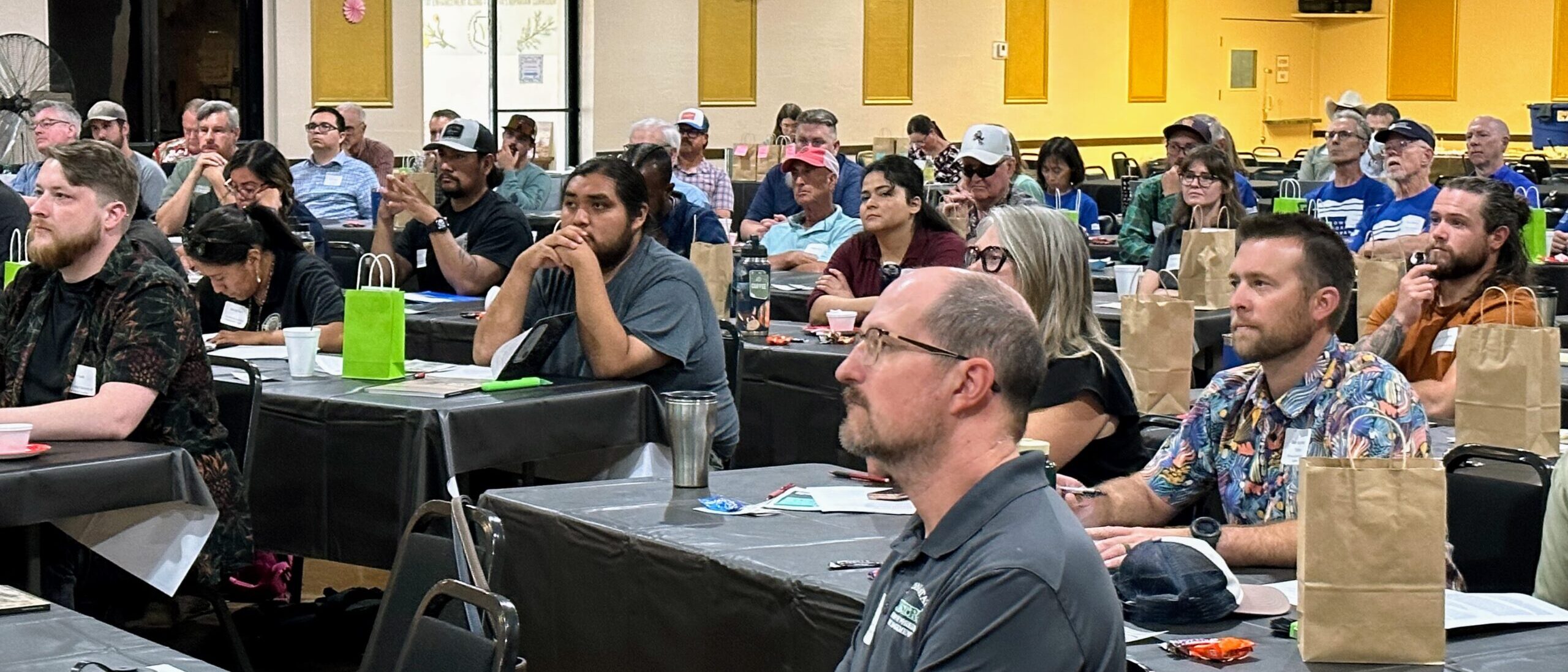
Participants and SWVMA board members at the 2023 SWVMA Workshop in Phoenix, which was held on October 18 at the American Arizona Italian Club. Over 90 attendees learned about invasive species management, best practices, Tamarisk beetles, and much more.
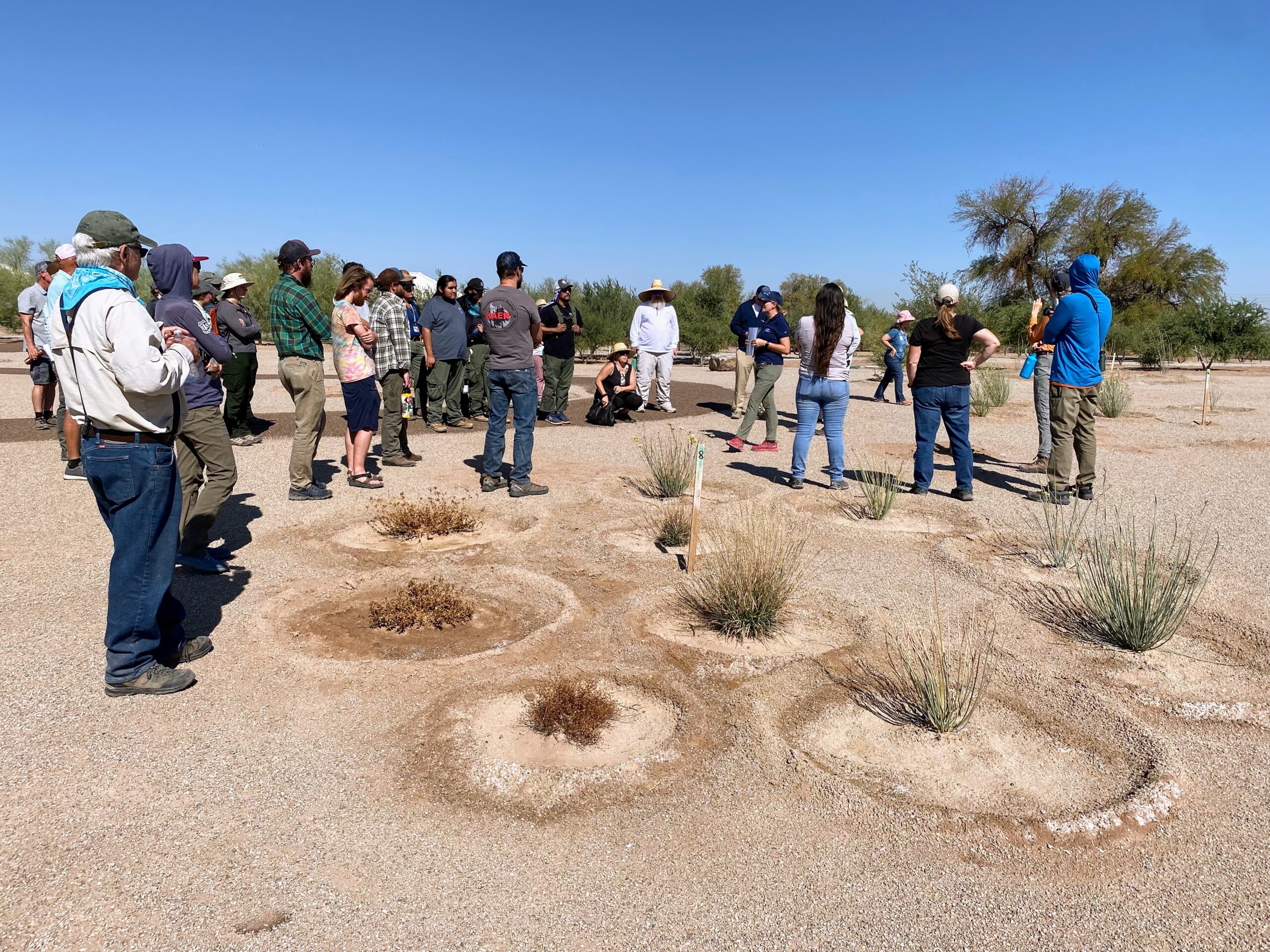
Participants of the Gila River Restoration and Habitat Enhancement Field Trips October 19, 2023 (Six total stops). This is the third stop at Estrella Mountian Regional Park, Pollinator Garden, and xeric landscape restoration project funded by Maricopa County Parks, Wildlife Habitat Council, ASU with a grant from the AZ Department of Forestry and Fire and the Arizona Forward. Juanita Armstrong was the lead.
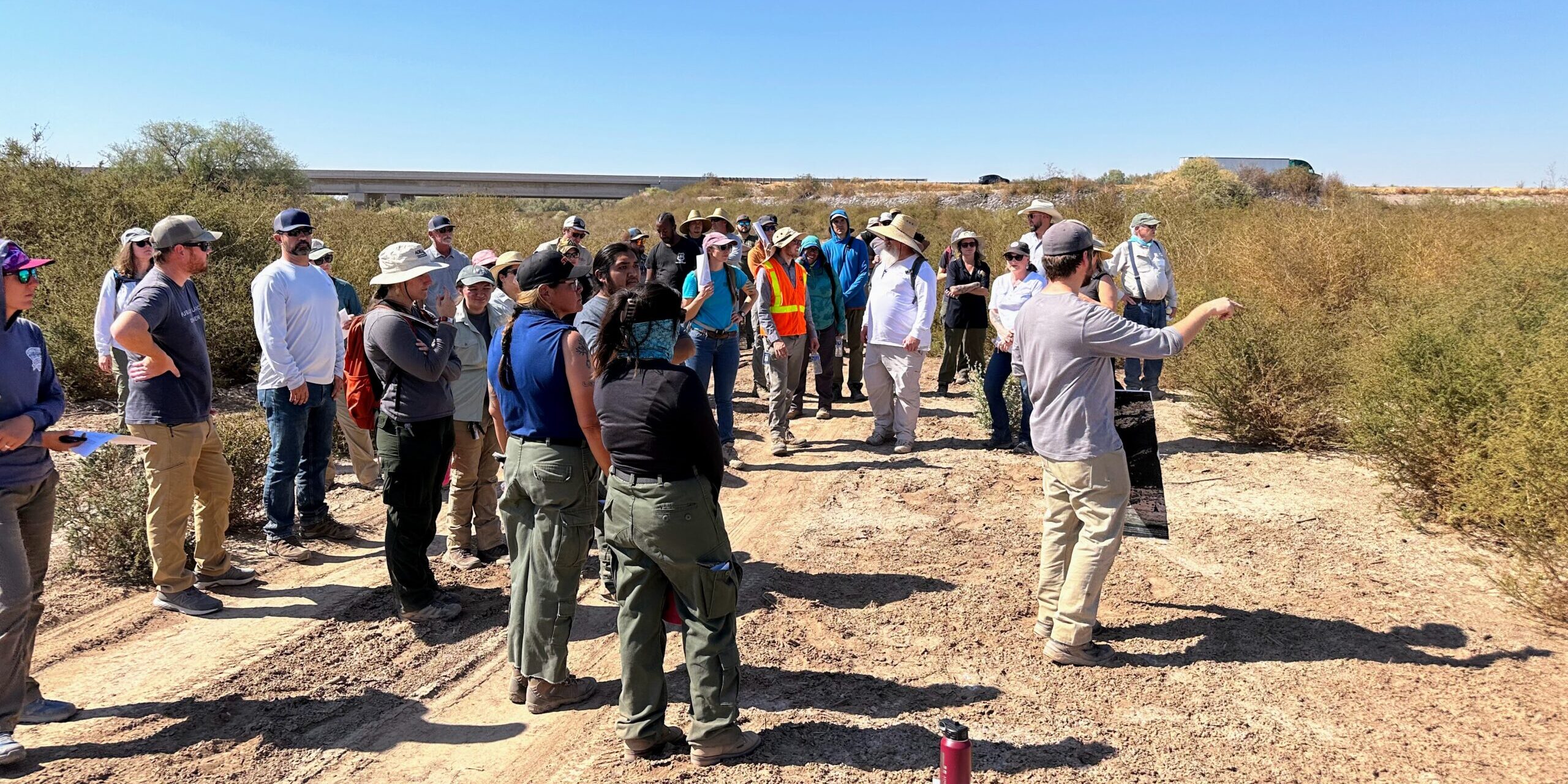
Participants of the Gila River Restoration and Habitat Enhancement Field Trips(Six total stops). This is the fourth stop at Robbins Butter Tamarisk removal and habitat restoration project by the Arizona Game and Fish Department. Bobby Lamoureux and Kelly Wolf led.
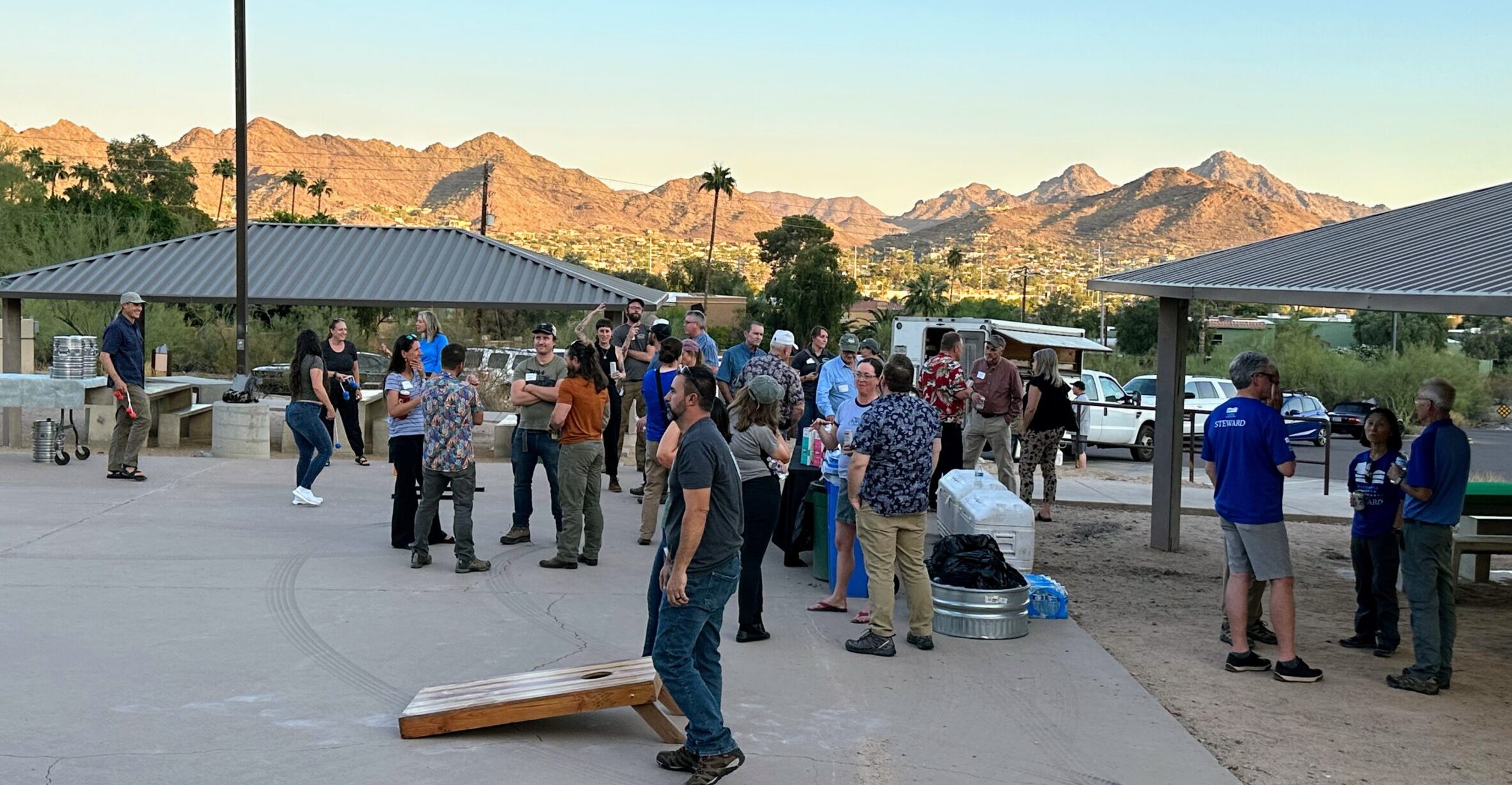
The super fun BBQ at the North Mountain Preserve in Phoenix! Social hour at its best!
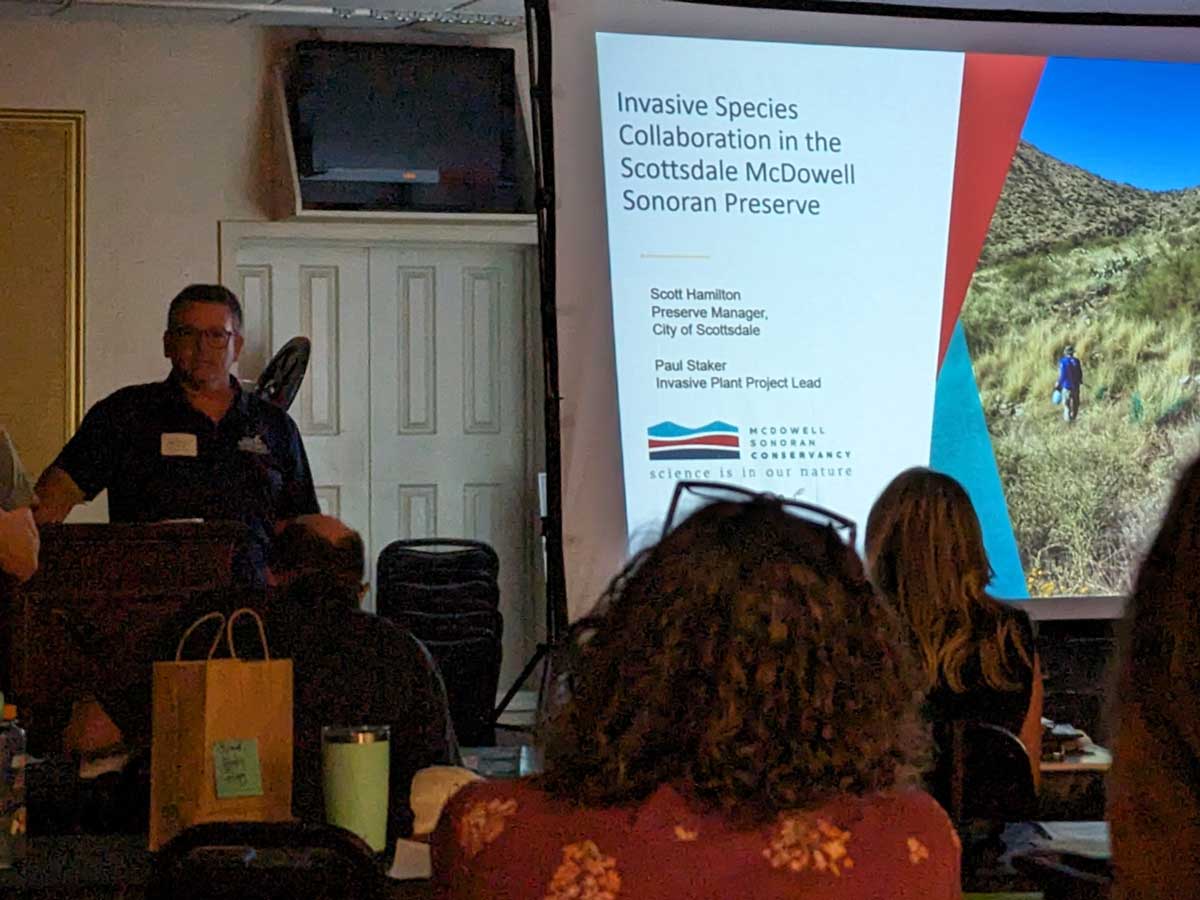
Day 1 of this training featured several lectures on restoration of riparian corridors. Some presentations highlighted the risks and benefits of biocontrol as well as proper treatment techniques for invasive plants within the McDowell Sonoran Preserve.
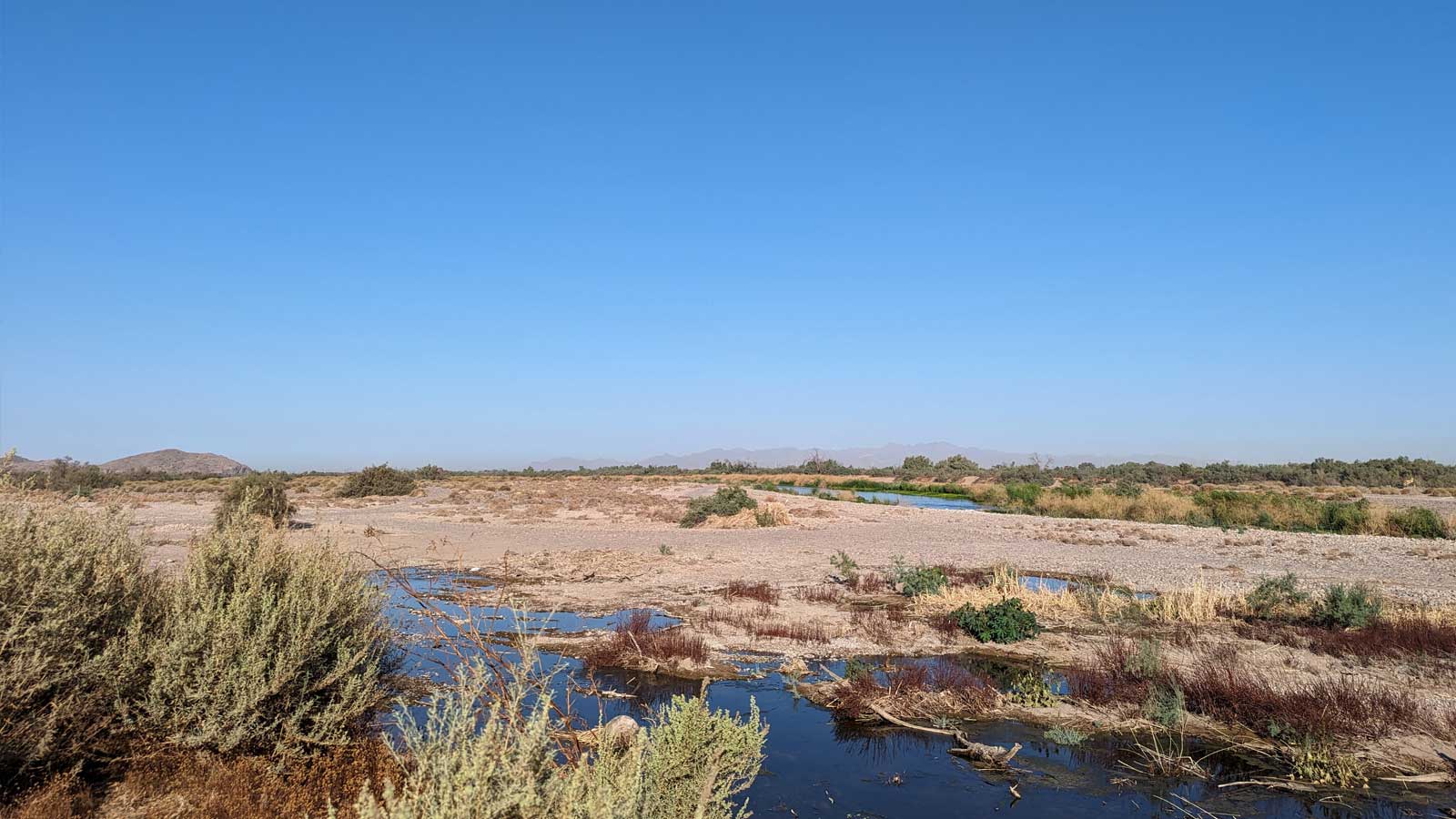
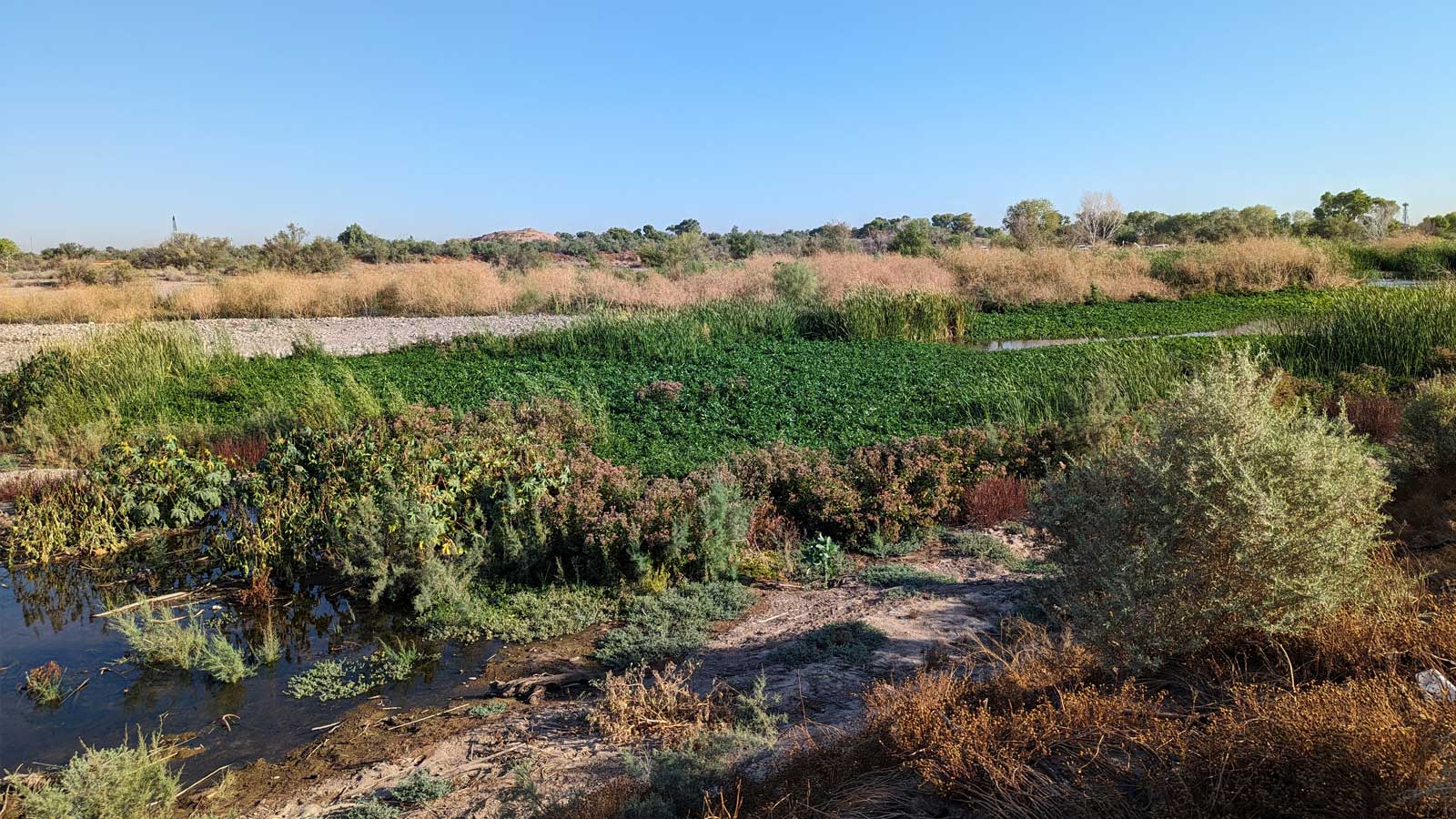
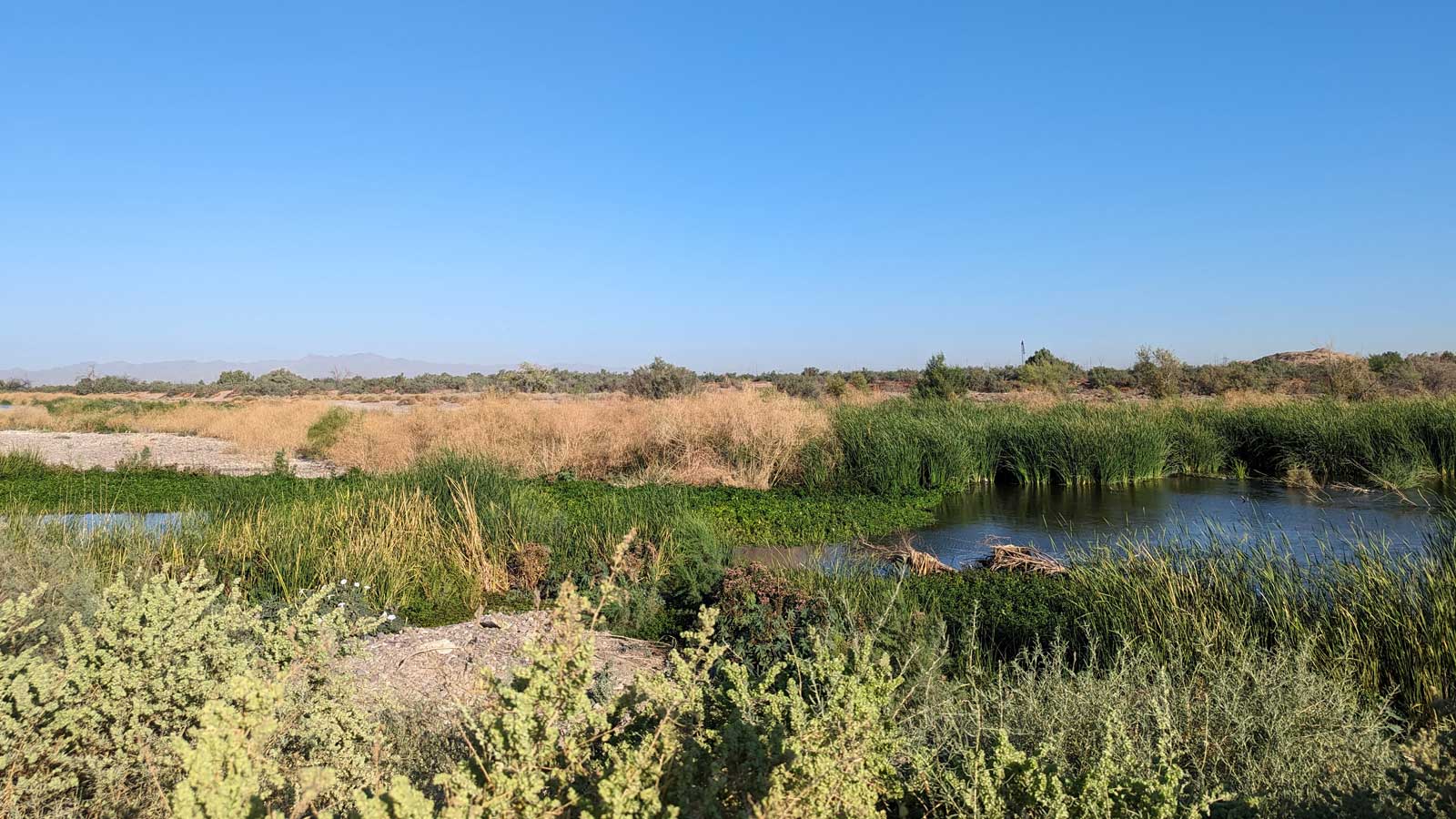
Day 2 consisted of a field trip to three sites within the west Phoenix area. The first site was the El Mirage Burned Area Rehabilitation Site. This site was severely impacted by the June 2020 Avondale Fire that burned 350 acres of Gila River floodplain vegetation. The fire burned a mix of native and exotic vegetation with stinknet and tamarisk being the primary invasive species. A Burned Area Rehabilitation Plan was completed for the area with objectives to restore native vegetation and wildlife habitat. Attendees were shown a treatment area that was mechanically cleared and planted with native shrub and tree species.
The second of three stops was the Estrella Mountain Regional Park Riparian Enhancement Site. This site included the Plant Research Trail where restoration work was previously completed on a 6-acre site. The results of tamarisk removal and the planting of tall pot native trees were shown on this visit. Invasive plant species within the site included stinknet and tamarisk – featuring tamarisk mastication and desert tall pot tree planting dating back to late 2023 – early 2024. This project was funded through the State of Arizona Gila River Nonnative Vegetation Species Eradication Fund, administered by DFFM.
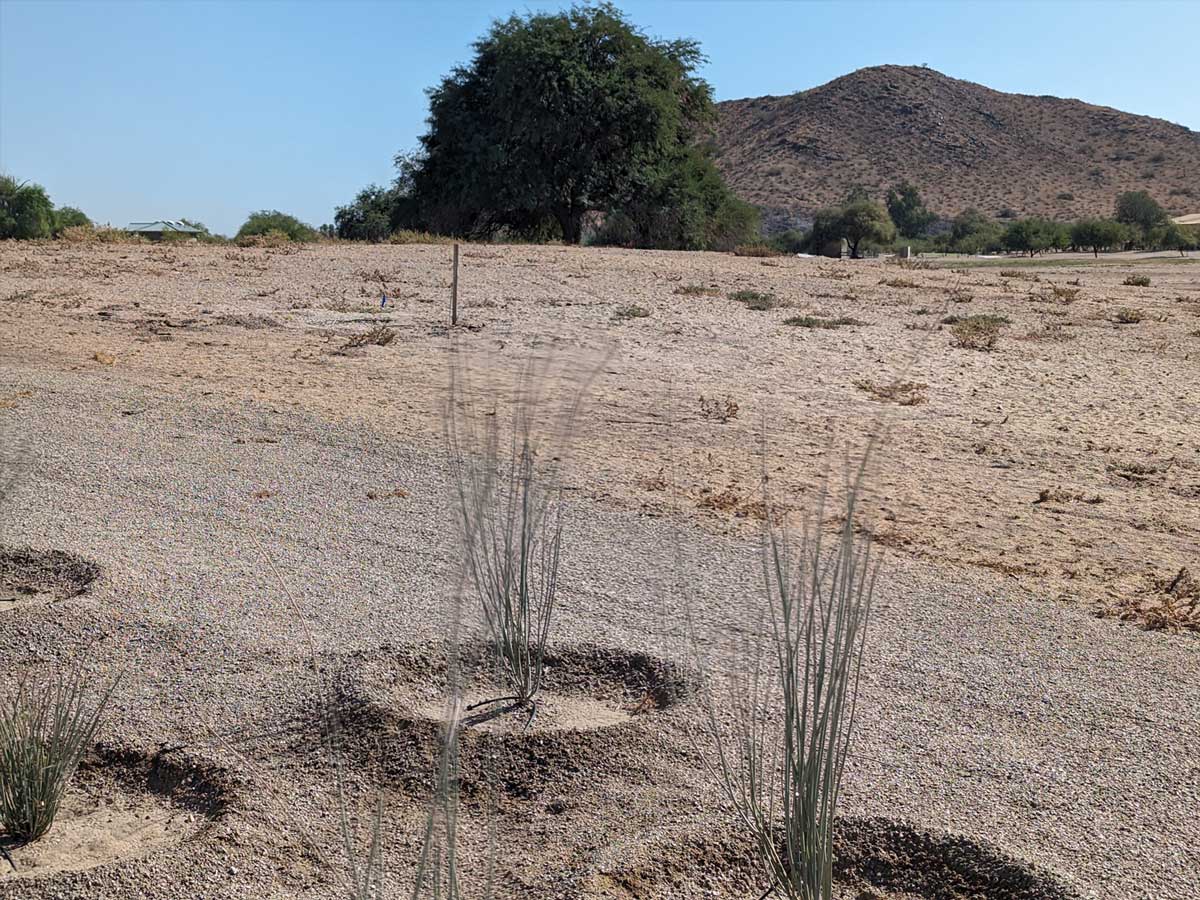
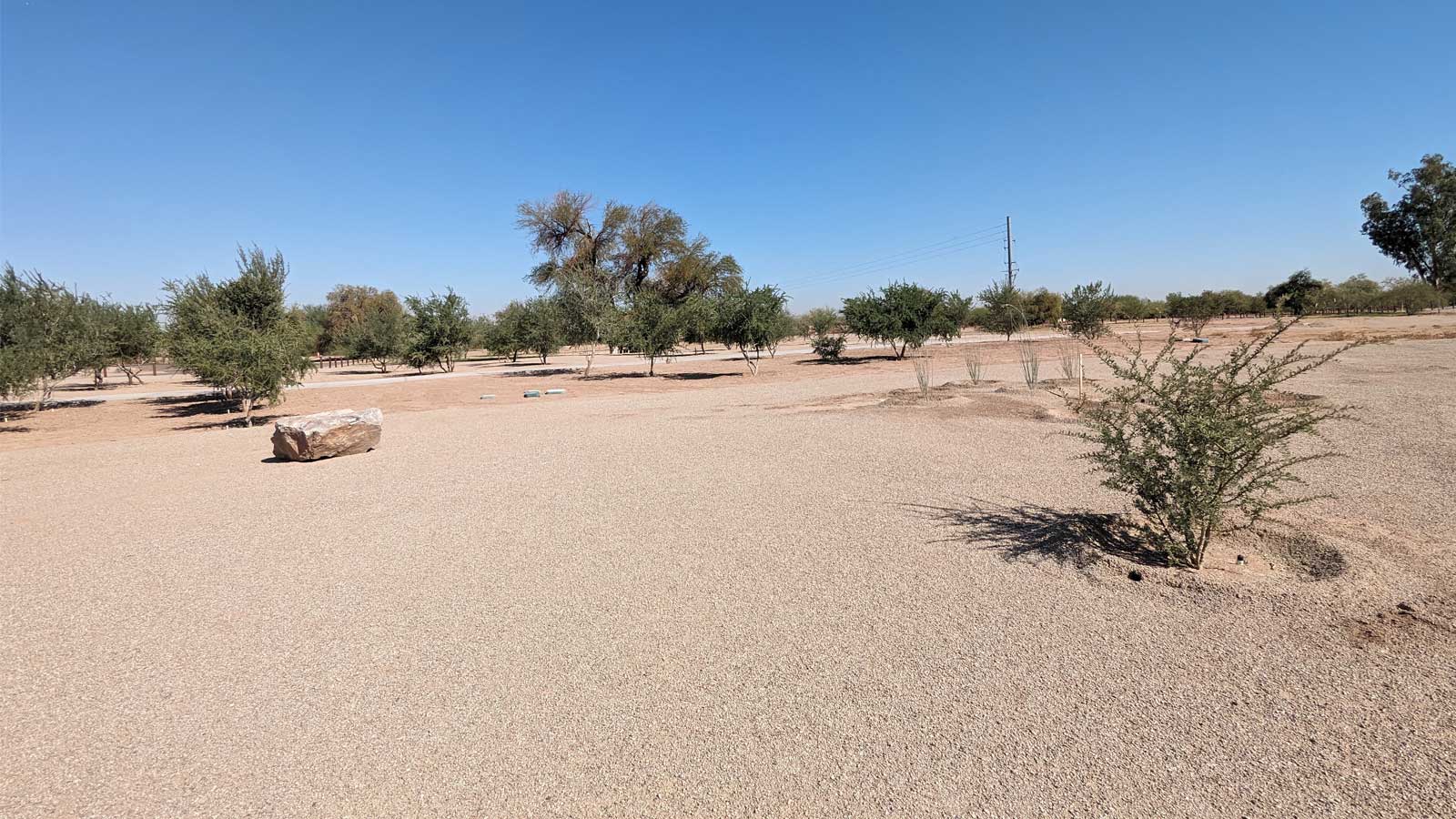
The field trip concluded with a walking tour through the Estrella Mountain Regional Park Pollinator Garden. This garden was made possible through a collaborative pilot project between Maricopa County Parks and Recreation, Wildlife Habitat Council and Arizona State University (via the Lower River Collaborative). This project was partially funded with a grant through ASU, to improve ecological habitat along the Gila River, while exploring this new collaboration with WHC. The emphasis on bringing corporate partners to help with project materials and a strong emphasis on public engagement and volunteer opportunities was essential. This project included restoring 5 acres of turf to native xeric landscape (4 acres) creating a berm along the trail edge, planting shade trees, and installing a pollinator garden 1+ acre, with a water feature, educational kiosk, and monitoring opportunities. Many trees, shrubs, and pollinator host plants were added throughout the walkway, and treated the four acres with hydroseeding.
A note to honor the indigenous significance of Estrella Mountain Regional Park.
Estrella Mountain Regional Park sits on ancestral Indigenous lands shaped by Hohokam, Akimel O’odham and Piipaash cultures. The Hohokam developed a series of canal systems and complex irrigation presided near the Gila River from as early as 500 AD until around 1450 AD, when the peoples left the area due to severe drought conditions. Around the 1600s, the Akimel O’odham and Piipaash settled at the base of the Estrella Mountain range and Gila River. These tribes still maintain a deep cultural legacy to the Sierra Estrella range that we see today.